

As the "Belt and Road" Initiative (BRI) continues to drive infrastructure development across Eurasia, Russia's construction and mining sectors are experiencing a surge in demand for heavy-duty equipment – and Chinese self-discharging trucks have emerged as a dominant player, capturing more than 30% of Russia's market share for such vehicles, according to a new industry report.
The data, released by the Moscow-based Russian Heavy Machinery Association (RHMA) this week, highlights a dramatic shift in Russia's self-discharging truck market over the past two years. Prior to 2023, European and Japanese brands like Caterpillar and Komatsu held nearly 60% of the market, with Chinese manufacturers accounting for less than 15%. But the BRI's focus on upgrading Russia's transportation networks, energy facilities, and mining projects – coupled with supply chain disruptions for Western equipment – has created a gap that Chinese self-discharging trucks have quickly filled.
"Russia's current infrastructure push includes over 20 major BRI-linked projects, from the expansion of the Trans-Siberian Railway to new coal and iron ore mines in Siberia," said Ivan Petrov, an analyst at RHMA. "These projects require large fleets of self-discharging trucks to transport construction materials and minerals. Chinese models stand out because they offer a balance of durability, affordability, and fast after-sales service – something Western brands have struggled to match amid logistical challenges."
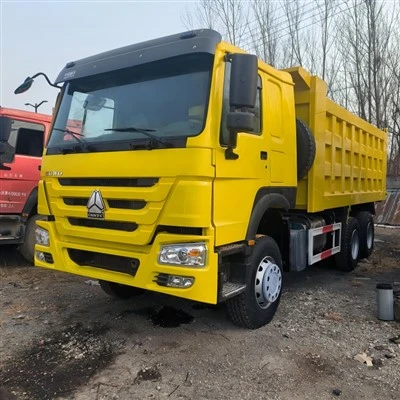
Chinese manufacturers such as Sinotruk and FAW have tailored their self-discharging trucks to Russia's harsh climate, equipping them with cold-resistant engines and reinforced bodies that can withstand extreme temperatures of -40°C in Siberia. This localization strategy has resonated with Russian buyers, who previously faced long delivery times for Western-made trucks and higher maintenance costs.
"Our self-discharging trucks are now operating in 12 Russian regions, mainly supporting mining and road construction projects under the BRI," said Zhang Wei, export manager at Sinotruk. "In 2024 alone, we delivered over 1,200 units to Russia, a 50% increase from the previous year. The 30% market share milestone shows that Russian customers trust our product quality and our ability to meet their urgent project needs."
The RHMA report also notes that the growth of Chinese self-discharging trucks in Russia is expected to continue. With Russia planning to invest over $50 billion in BRI infrastructure projects by 2027, demand for heavy-duty vehicles is projected to rise by 18% annually. Chinese manufacturers are already expanding their local service centers in Moscow and Novosibirsk to further strengthen their market position.
For Russian construction companies like UralStroy, the shift to Chinese self-discharging trucks has been a game-changer. "We used to rely on European trucks, but delivery delays often slowed down our projects," said Elena Mikhailova, procurement director at UralStroy. "Now, with Chinese self-discharging trucks, we get deliveries within 45 days and on-site maintenance support. This has helped us cut project timelines by 10%."
As the BRI's infrastructure boom shows no signs of slowing, Chinese self-discharging trucks are poised to play an even larger role in Russia's development – solidifying their status as a key player in the country's heavy machinery market.
China Self-discharging Trucks Manufacturer - Junshengda Automobile Trading
Jining Junshengda Automobile Trading Co., Ltd. was established in April 2022, focusing on the import and export of heavy trucks, trailers, engineering vehicles and accessories. Relying on more than 20 years' experience in product sales and foreign trade, the company is proficient in the structure and process of various vehicles and accessories, familiar with the whole export process, and can efficiently connect with global customers. At present, the products are exported to Africa, the United States, Asia and Central Asia, with an annual revenue of about 10million US dollars, which has continued to grow steadily in recent years.
Email: Junshengda189@aliyun.com


