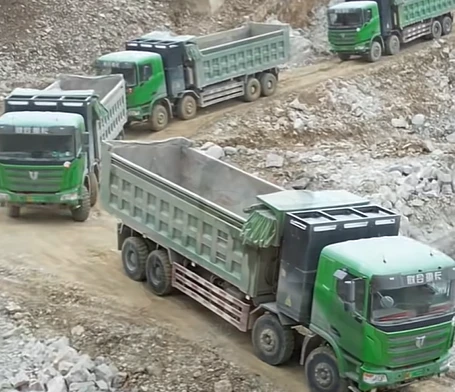
For every 3 heavy trucks sold, one is a green card. The penetration rate of 30.45% for new energy heavy-duty trucks in November is not only a record breaking figure, but also an irreversible violent impulse towards the basic performance of traditional fuel vehicles. In November, nearly 28000 new energy heavy-duty trucks were sold domestically, a year-on-year increase of 178%. This is not only the highest monthly sales volume in history, but also the first time that the penetration rate of new energy has exceeded the 30% mark. In the industrial cycle, 30% is a dominant turning point, indicating that new energy heavy-duty trucks have officially entered the stage of harvesting the stock of the mainstream market from experimental products in marginal scenarios. Why did this almost crazy acceleration occur in November? On the surface, it appears to be driven by the year-end stock and the countdown to the old for new subsidy, but the underlying logic is the TCO of new energy heavy-duty trucks, which is the logic of the entire human resource cycle cost. When the manufacturing PMI rebounds and drives demand for transportation capacity, we find that in many high-frequency scenarios, electric vehicles have become the only optimal solution. At the level of brand competition, the market is experiencing a fierce battle for positions, with XCMG, Jiefang, and Sany still firmly ranking in the top three orders, with monthly sales exceeding the threshold of 4000 vehicles. But what really puts pressure on the industry is the turnaround speed of traditional fuel vehicle giants. China National Heavy Duty Truck Group led the market with a growth rate of 279%, while Shaanxi Automobile Group also achieved a growth rate of 24%. Once these giants push their supply chain and channel advantages into the new energy track, the original new forces in car manufacturing will face unprecedented survival pressure. The most direct evidence of this violent reconstruction is that new energy heavy trucks have entered the core hinterland of China's logistics. In the first 11 months, the number of registered vehicles in Shanghai and Shenzhen both exceeded the 10000 vehicle mark. This means that new energy heavy-duty trucks are no longer just hiding in mining areas and steel mills, they have already taken over port transportation and intercity logistics on a large scale. When the core logistics hub completes the new energy closed-loop, the decline of fuel vehicles will only be a global problem. The cumulative record of 185800 vehicles in the first 11 months makes 2025 destined to be a watershed in the history of new energy heavy-duty trucks. But the real test lies ahead, at the marginal effect point of the subsidy policy by 2026, whether the new energy heavy-duty trucks that have lost their policy handrails can rely solely on commercial logic to hold onto this 30% territory, which is the key to determining the industry pattern in the next decade. The record in November is just the prelude. New energy heavy-duty trucks have gone from being seen as a performance advantage by cardholders to becoming a compulsory course. Understanding the anxiety and dividends behind this 36.45%, you can find your own living space in this round of violent reconstruction. In fact, the outbreak of new energy heavy-duty trucks is only half of the story, the other half is the gas truck that is about to set a record of 200000 vehicles, but now it is a bit worrying. One is the new forces attacking fiercely, and the other is the old players defending fiercely.