

Overseas Observation | Observing the Development Trend of American Trucks from the Super Truck Plan
The US Department of Energy has continuously funded three phases of the "Super Truck" program, and the cooperation between China and the United States in improving truck energy efficiency has a long history. With the deepening of cooperation between China and the United States on climate change, what are the key points of cooperation between China and the United States in improving truck energy efficiency under the background of carbon neutrality?
Overview of the "Super Truck" Program in the United States
In order to reduce fuel consumption and carbon emissions of American trucks, lower end-user usage costs, and enhance the country's advantage in truck technology innovation, the US Department of Energy jointly launched an important technology innovation program, SuperTruck, in 2010. The program has 15 industry partners, including six truck manufacturers who collectively account for 99% of the tractor truck market.
The first phase of the "SuperTruck I" project, from 2010 to 2016, cost $284 million in cooperation, with a 1:1 funding ratio between industry and the federal government.
The second phase of 'SuperTruck II' will run from 2017 to 2021, with a budget of $160 million and support funds shared equally between businesses and the government.
SuperTruck III will be available from 2021 to 2025, with a total funding of over $100 million, focusing on zero emission heavy-duty trucks, electrification, and charging/refueling infrastructure.
Core indicators and objectives of the super truck project
SuperTruck I: Developed and demonstrated a 50% improvement in freight efficiency compared to the 2009 Level 8 tractor, achieving nearly 10 miles per gallon and increasing the braking thermal efficiency of the demonstration truck to 50%.
SuperTruck II: Showcasing a truck prototype loaded with an engine with a thermal efficiency of 55%, increasing the fleet's freight efficiency by 100%.
SuperTruck III: Showcasing 400 mile pure electric trucks, megawatt level charging facilities, and more.
The achievements of the super truck project
The vehicle developed by SuperTruck I program is an 8-level combination truck (commonly known as an 18 wheel truck), which significantly improves the fuel, engine, and transmission system efficiency of the tractor trailer by adopting advanced technology. As the backbone of domestic freight transportation, 18 wheeled trucks account for 70% of the total freight tonnage and consume approximately 28 billion gallons of diesel annually, accounting for 22% of the total transportation energy consumption.
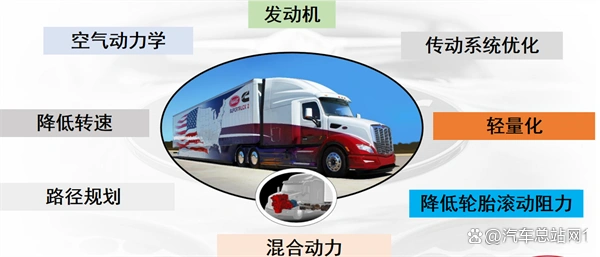
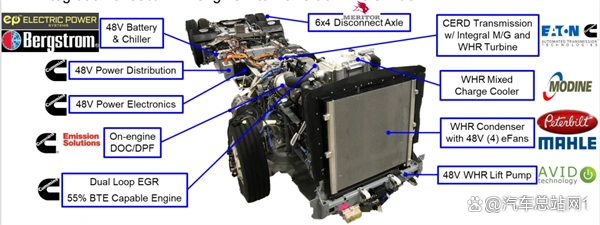
The prototypes developed by Volvo, Daimler, Cummins/Peterbilt, and Navistar have exceeded the SuperTruck I target. Compared to the 2009 Volvo VNL tractor, the newly designed tractor has reduced weight by 3200 pounds, reduced resistance by 40%, and improved freight efficiency by 88%. The SuperTruck II project will utilize various truck and trailer technology methods to achieve performance goals, such as improving engine efficiency, transmission system efficiency, air resistance, tire rolling resistance, and vehicle weight
By adopting an integrated system approach to ensure that the various components of the vehicle work together, the five SuperTruck II projects are expected to more than double the miles per gallon for Class 8 trucks. The Cummins SuperTruck II team has achieved a braking thermal efficiency of 55% through engines equipped with waste heat recovery devices. Compared to the benchmark truck in 2009, Freightliner's first super truck achieved an overall freight efficiency improvement of over 115% and an engine brake thermal efficiency improvement of over 50%.
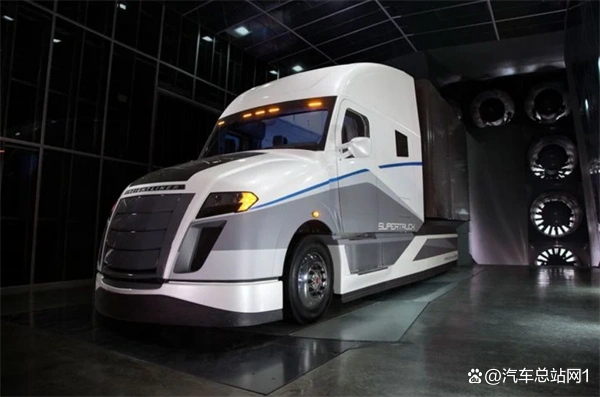
Freightliner prototype
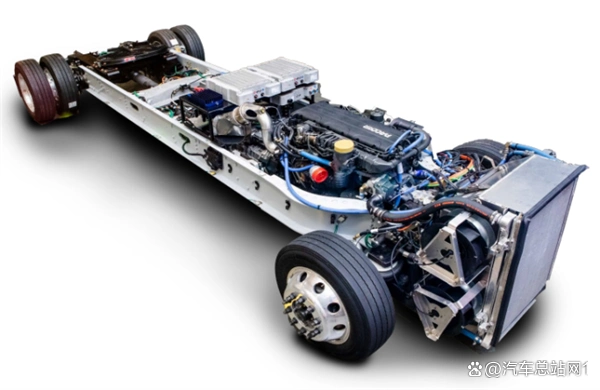
Ultra high thermal efficiency heavy-duty truck engines optimized with waveform optimized coated pistons, turbo composite technology, long stroke, two-stage turbocharging, common rail fuel injection system, Rankine cycle waste heat recovery, and other technologies.
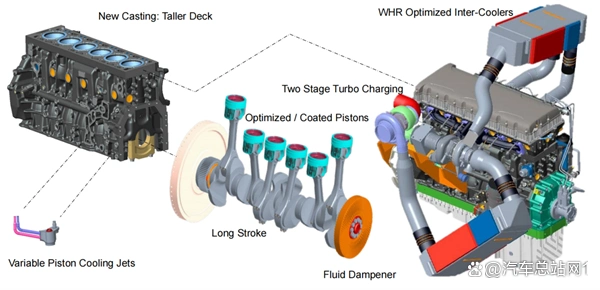
Prototype of ultra-high thermal efficiency engine
The reason for achieving and exceeding the weight reduction target in terms of lightweighting (the initial goal was to reduce weight by 40%, but the weight of the super truck was reduced by 45%) is partly due to the use of an aluminum frame that is 900 pounds lighter than the previous generation product. Despite the addition of new technology to the truck, the weight has still been reduced.
The Future SuperTruck III
Super Truck 3 will fund electrification projects for medium and heavy-duty freight trucks. Additional investment will improve vehicle efficiency and expand electric vehicle infrastructure.
In 2021, the US Department of Energy (DOE) announced two financing opportunities totaling over $100 million (some say over $162 million) to improve the efficiency of cars, trucks, and off-road vehicles and reduce carbon emissions. These funds will be used to support the next phase of the 'SuperTruck' program, aimed at electrifying freight trucks and expanding electric vehicle (EV) infrastructure and efforts to reduce emissions from both on road and off road vehicles.
US Secretary of Energy Jennifer M. Granholm stated that achieving net zero carbon emissions by 2050 means actively reducing the largest source of emissions, which is the transportation sector. Transportation accounts for approximately 30% of the total energy demand in the United States and is also the largest source of greenhouse gas emissions. The first two super truck programs of the Department of Energy have led the largest truck manufacturer in the US semi-trailer market to achieve a huge leap in fuel efficiency. This new funding will continue to build on this foundation, promoting the electrification of trucks of all sizes, while striving to expand electric vehicle charging services and develop low emission vehicle engines.
To this end, the Vehicle Technology Office (VTO) and the Office of Hydrogen and Fuel Cell Technology (HFTO) of the Office of Energy Efficiency and Renewable Energy (EERE) of the US Department of Energy have collaborated to release the SuperTruck 3 funding opportunity announcement (FOA), providing up to $100 million in funding over four years to explore electrified medium and heavy-duty truck and freight system concepts for higher efficiency and lower emissions. The funding focuses on a series of electrification methods, such as fully electric, plug-in hybrid systems using renewable biofuels, hydrogen and fuel cell technologies, including hybrid strategies such as fuel cell range extenders.
Observing the Development and Application Trends of American Trucks from the Evolution of Super Truck Phase 3 Project
Traditional internal combustion engines focus more on electrification, intelligence, and zero emission technology. The core indicators of the first two phases of the super truck plan focus on the effective thermal efficiency of fuel internal combustion engines (diesel engines), supplemented by technological innovations in lightweight, aerodynamics, system integration, etc. The third phase of the super truck plan focuses more on the research and application of advanced energy power systems, near zero emissions, hydrogen energy utilization, electrification technology, charging/refueling infrastructure, intelligent driving assistance and other technologies.
The foundation of cooperation between China and the United States in the field of trucks is strong. Since 2009, the "China US Clean Energy Joint Research Center" has been established under the initiative of the leaders of China and the United States. Its sub project is the "China US Joint Research on Key Technologies for Improving Energy Efficiency of Medium and Heavy duty Trucks" project, which is a national key research and development program of the China US Truck Energy Efficiency Alliance and a key project for intergovernmental international scientific and technological innovation cooperation. The total project funding is nearly 100 million yuan. Led by well-known domestic universities and industry leaders such as Weichai Power, Guangxi Yuchai, and China National Heavy Duty Truck Group, covering the entire industry university research chain and industrial strength, we carry out Sino US cooperative research with the goal of developing engineering prototypes and demonstration vehicles, which plays a leading role in promoting the technological development of China's truck industry and participating in international cutting-edge technology competition.
In recent years, the United States has maintained sustained international leadership in energy-saving and emission reduction technologies for traditional internal combustion engines in trucks. At the same time, it has continued to invest in research and development funds in electrification, low-carbon/zero carbon fuels, zero emission trucks, and charging/hydrogenation infrastructure. In the future, China and the United States will also continue to make efforts in truck research and development cooperation in electrification, hydrogen power, and infrastructure.


